
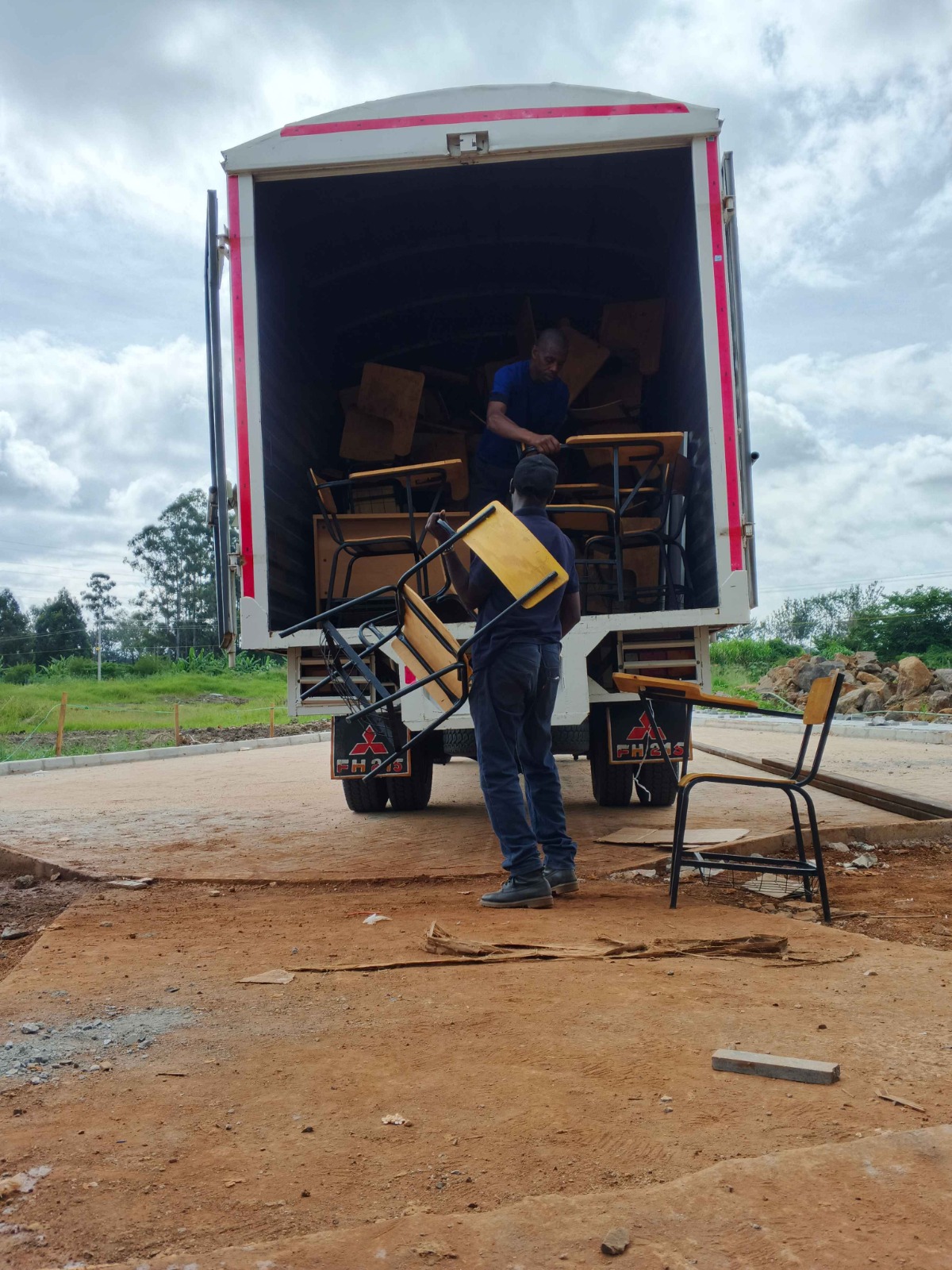
Best University and College Movers in Kenya: Your Complete Guide to Institutional Relocations
By Dial and Move Kenya | Est. 2015 | Muthaiga Business Square (Pangani), Nairobi “Seamless Moves, Happy Lives”
When an Institution Decides to Move
There are moments in the life of every institution — a university, a college, a polytechnic, or a training centre — when growth demands a new address. Perhaps the campus has simply outgrown its walls. Perhaps a strategic partnership calls for a presence in a new neighbourhood. Perhaps a lease has ended and a better, more purpose-built facility beckons. Whatever the reason, the decision to relocate an entire institution of higher learning is one of the most consequential logistical undertakings any administration can face.
Unlike a household move, or even a standard office relocation, an institutional move carries a weight that is both physical and symbolic. There are laboratories packed with fragile equipment worth tens of millions of shillings. There are libraries holding thousands of catalogued volumes, periodicals, and archival materials that have been assembled over decades. There are administrative records — student transcripts, financial documents, accreditation files — whose safe transfer is not merely a matter of convenience but of legal obligation. There are IT server rooms, medical simulation labs, workshop machinery, auditorium fittings, and dormitory furniture. And above all, there is the irreplaceable trust of students, staff, parents, and regulatory bodies who expect the institution to reopen at its new address without a single day more of disruption than is absolutely necessary.
This is the world that Dial and Move Kenya was built to navigate. Since 2015, we have been Kenya’s go-to corporate and institutional moving partner, operating from our base at Muthaiga Business Square in Pangani, Nairobi. Our teams are trained in the specific demands of large-scale institutional relocations, and our track record includes some of the most challenging and high-profile moves in the country’s education sector. In this comprehensive guide, we walk you through everything you need to know about institutional relocations in Kenya — what makes them unique, how they are planned and executed, what pitfalls to avoid, and why partnering with experienced professionals makes all the difference.
We will also walk you through two landmark moves that Dial and Move Kenya has proudly executed: the AMREF University Kenya relocation from Langata Road to Northlands, and the remarkable KIPS College five-floor descent from EABS Building to KTDA Plaza — both of which stand as testimony to what meticulous planning and experienced execution can achieve.
Understanding Institutional Moves: A Category of Their Own
Before diving into the specifics, it is worth pausing to understand why institutional moves — and university and college moves in particular — are treated as a specialised discipline within the moving industry.
Scale and Complexity
A single lecture hall may contain fixed seating for three hundred students, projection systems, sound equipment, and climate-control infrastructure. Multiply this by a dozen teaching spaces, add faculty offices, a dean’s suite, multiple computer labs, a library, a gymnasium, a medical facility, a cafeteria, and administrative wings, and the sheer scale of the task becomes evident. Professional institutional movers do not count boxes — they count container-loads, and they plan in phases that sometimes stretch over weeks or months.
Sensitivity of Contents
Universities and colleges hold items that fall into several highly sensitive categories. Scientific instruments — spectrometers, centrifuges, electron microscopes — require specialist packing, climate-controlled transport, and re-calibration protocols. IT infrastructure — servers, networking equipment, UPS systems — must be backed up, carefully labelled, and reconnected in a precise sequence. Library collections must maintain their cataloguing integrity; a book placed in the wrong box can take days to locate in a new library. Artwork, historical documents, and archival materials must be handled with conservator-level care.
Time Constraints
Institutions operate on academic calendars. A move that bleeds into an examination period, or that delays the commencement of a new semester, is not merely inconvenient — it can have regulatory, financial, and reputational consequences. The best institutional movers work with academic calendars in their bones, scheduling the most disruptive phases during inter-semester breaks and ensuring that critical academic functions are restored first.
Stakeholder Complexity
A household move involves one family making decisions. An institutional move involves a vice-chancellor, multiple deans and heads of departments, a registrar’s office, an IT director, a librarian, a facilities manager, finance officers, student representatives, and — in the case of regulated institutions — oversight from bodies such as the Commission for University Education (CUE). The project manager on the moving company’s side must be as much a diplomat and communicator as a logistics expert.
Regulatory Compliance
Universities in Kenya are accredited institutions whose physical premises are subject to regulatory inspection. The Commission for University Education must, in certain cases, approve or be notified of significant changes to a university’s physical infrastructure. This adds a layer of compliance planning that most movers are not equipped to support — but that Dial and Move Kenya has navigated successfully for its institutional clients.
The Dial and Move Kenya Institutional Moving Process
At Dial and Move Kenya, we have developed a proprietary institutional relocation framework built on ten years of corporate and institutional moving experience. Here is how we approach every large-scale institutional move.
Phase 1: Pre-Move Assessment and Planning
The process begins with a comprehensive site survey of both the origin and destination premises. Our senior team visits the existing campus to conduct a detailed inventory of all assets — furniture, equipment, IT infrastructure, library holdings, laboratory apparatus, kitchen and catering equipment, and any specialist items. Simultaneously, we assess the destination site to understand access routes, lift capacities, floor load ratings, corridor widths, and parking logistics.
From this assessment, we produce a bespoke relocation plan that includes:
- A complete asset inventory and categorisation by sensitivity and handling requirements
- A phased move schedule aligned with the academic calendar
- Floor plans for both origin and destination, with numbered zone mapping
- A communication plan for all stakeholders
- A dedicated project manager assigned to the institution
- A contingency framework for weather, access issues, or unforeseen delays
Phase 2: Pre-Move Preparation
Weeks before the first item leaves the building, our preparation team goes to work. Specialist packing materials are ordered in advance: custom crates for laboratory equipment, acid-free boxes for archival materials, anti-static packaging for IT equipment, padded furniture wraps, and custom book-trolleys for library collections. Each box and item is barcoded and logged in our move management system, creating a digital chain of custody for every single asset.
Our IT specialists work alongside the institution’s own IT team to plan server shutdowns, backup protocols, and network reconnection sequences. Our library specialists liaise with the institution’s librarian to ensure that cataloguing systems are preserved through the move. Where specialist items — such as scientific instruments or medical simulation equipment — require manufacturer involvement for dismantling and recommissioning, we coordinate that third-party engagement as part of our overall project management.
Phase 3: Execution
Move day — or move week, or move month, as the case demands — is where our operational excellence shows. Our teams work in coordinated shifts, with zone supervisors responsible for specific areas of the building. Every item that leaves a room is scanned out; every item that arrives at the destination is scanned in. Our fleet of vehicles is sized to the task: from enclosed panel vans for IT equipment to large curtainsider trucks for bulk furniture, to specialist flatbeds for heavy laboratory machinery.
Our teams are trained in furniture dismantling and reassembly, equipment handling protocols, and building protection — floor runners, door frame protectors, and lift padding are deployed as standard on every institutional move. We work around the institution where possible, keeping disruption to any ongoing operations at a minimum.
Phase 4: Setup and Handover
Moving boxes from one building to another is only half the job. At the destination, our teams follow the pre-agreed floor plans to place every item in its designated location. Furniture is reassembled. IT racks are positioned. Library shelving is configured. Only when every item has been placed, accounted for, and signed off by the relevant department head does our project manager call the move complete. We then conduct a joint walkthrough with the institution’s facilities manager, and any items requiring adjustment are dealt with immediately.
Phase 5: Post-Move Support
Our relationship with institutional clients does not end at handover. We remain available for post-move support — repositioning of items, collection of packing materials, and follow-up inspections — for a defined period after the move is complete. For large institutions, this post-move support window can extend for several weeks.
Case Study 1: AMREF University Kenya — A Landmark Relocation from Langata Road to Northlands
Background
AMREF University Kenya is one of East Africa’s most respected health sciences universities, with a proud history of training nurses, midwives, health records officers, clinical officers, and community health workers. Founded on the legacy of the African Medical and Research Foundation, the university has long been associated with excellence in health education and a commitment to reaching underserved communities across the continent.
For many years, AMREF University Kenya operated from its premises on Langata Road — a well-known address in Nairobi’s south-western corridor, conveniently located near Nairobi National Park and the Karen residential belt. But as the university grew, and as its ambitions for expanded facilities, modern laboratories, and a purpose-built campus came into sharper focus, the administration made the bold decision to relocate to Northlands, a rapidly developing node to the north of Nairobi known for its modern infrastructure, wide roads, and proximity to the growing residential areas of Ruiru, Juja, and Thika Road.
The move from Langata Road to Northlands was not merely a change of address. It was a statement of institutional ambition — a declaration that AMREF University Kenya was investing in its own future, building a campus environment that would serve its students and faculty for the next generation.
The Challenge
The AMREF University Kenya relocation presented Dial and Move Kenya with one of its most complex institutional briefs. The university’s inventory included:
- Fully equipped nursing and midwifery simulation labs, with high-fidelity mannequins, clinical trolleys, IV stands, monitoring equipment, and ward simulation furniture
- Multiple computer labs with networked workstations and server infrastructure
- A well-stocked library with thousands of health sciences texts, journals, and electronic resources
- Administrative offices holding decades of student records, financial documents, and accreditation files
- Lecture theatres with fixed and moveable seating, projection systems, and audio equipment
- A skills laboratory with anatomical models, surgical instruments, and teaching materials
- Faculty offices with research materials, personal collections, and specialised academic equipment
- Common areas, cafeteria, and student services furniture
The distance from Langata Road to Northlands — crossing much of Nairobi’s urban sprawl — added logistical complexity. Route planning had to account for vehicle height restrictions, bridge weight limits, and Nairobi’s notoriously unpredictable traffic patterns. Moves were scheduled to avoid peak morning and evening rush hours, with convoy protocols established for the transport of the most sensitive equipment.
Our Approach
Dial and Move Kenya assigned a dedicated senior project manager to the AMREF University Kenya account from the first day of planning. A pre-move assessment took three full days, with our team working through every room, corridor, and storage space in the Langata Road premises. The resulting inventory ran to hundreds of line items, each coded by category, handling requirement, and destination zone at the Northlands campus.
Working closely with the university’s registrar, IT manager, chief librarian, and heads of each academic department, we developed a phased relocation schedule that prioritised the preservation of academic continuity. Administrative functions were moved first, enabling the university’s back-office operations to resume at Northlands while the academic transition continued. The library was moved in a carefully sequenced operation that maintained the integrity of the Dewey Decimal classification throughout, with library staff embedded in our moving team for the duration.
The simulation labs — arguably the most logistically demanding element of the entire move — were handled by a specialist team with experience in medical equipment relocation. Each piece of simulation equipment was individually wrapped, crated where necessary, and transported in climate-controlled vehicles. Upon arrival at Northlands, the simulation labs were set up in accordance with a pre-agreed floor plan developed jointly with the university’s academic team.
The IT migration was executed in close coordination with the university’s IT department. Server backups were completed before the first cable was unplugged. Network infrastructure was pre-installed at the new premises by a third-party contractor coordinated through Dial and Move Kenya’s project management office, ensuring that IT systems were fully operational on day one at the new campus.
The Outcome
The AMREF University Kenya relocation was completed on schedule and within budget. The university was able to commence academic operations at its new Northlands campus without any significant disruption to its academic calendar. Student feedback was positive, and the new campus facilities — purpose-built, modern, and spacious — were immediately welcomed by the university community. For Dial and Move Kenya, the AMREF University Kenya move stands as one of our proudest achievements and a benchmark for institutional relocation excellence in Kenya.
Case Study 2: KIPS College — Five Floors Down in the Heart of Nairobi’s CBD
Background
KIPS College is one of Kenya’s most established professional training colleges, with a strong reputation in accountancy, finance, business, and professional certifications. Serving thousands of students pursuing CPA, ACCA, CIFA, and other professional qualifications, KIPS College occupies a central place in the Kenyan professional education landscape.
For a significant period, KIPS College operated from multiple floors of the iconic EABS Building on Moi Avenue — one of Nairobi’s most recognisable commercial towers. As the college’s operational needs evolved and an opportunity arose to consolidate and upgrade its premises, KIPS College entered into an agreement to move its entire operation to KTDA Plaza, another prominent building in the Nairobi Central Business District.
The physical distance between EABS Building and KTDA Plaza is, measured in metres, not great. But the logistical challenge of moving an entire college operation — spanning five floors — from one CBD high-rise to another is anything but simple.
The Challenge
The KIPS College move from EABS Building to KTDA Plaza was defined by two overriding constraints: vertical complexity and CBD operational restrictions.
Vertical complexity meant that the college’s assets — lecture room furniture, computer equipment, library materials, administrative furniture, IT infrastructure, examination materials, and student services equipment — were distributed across five floors of EABS Building, connected by lifts and stairwells with the usual CBD building limitations on load capacity and access times. Moving large items required careful coordination with the building management of both EABS and KTDA Plaza, with dedicated lift booking schedules, floor protection protocols, and timed access windows.
CBD operational restrictions meant that large vehicles could not simply park outside either building for extended periods. Nairobi’s CBD has strict regulations governing the movement and parking of commercial vehicles, and enforcement is active. Our logistics team developed a timed loading and unloading schedule that worked within the permitted operating windows, deploying smaller relay vehicles where necessary to bridge the distance between the truck staging area and the building entrances.
Additional challenges included:
- The preservation and transfer of KIPS College’s substantial library of professional accountancy and finance texts, study materials, and past paper archives
- The careful handling of examination materials and records, which are subject to strict security protocols
- The migration of the college’s IT systems, including the student management platform, examination systems, and faculty resources
- The tight timeline imposed by the college’s academic schedule — the move had to be substantially complete before the commencement of the next intake
Our Approach
Dial and Move Kenya deployed a multi-team approach to the KIPS College move, with separate specialist teams assigned to IT, library, furniture, and general goods. Each floor of EABS Building was treated as a discrete operational zone, with a zone supervisor, a dedicated inventory manifest, and a clear handover checklist.
The five-floor vertical challenge was addressed through a combination of lift-booking strategy and stairwell relay operations. For smaller, lighter items — boxed books, files, stationery, and packaged equipment — we deployed a relay chain using our trained porters, passing items down the stairwells in an efficient human chain that proved faster and more reliable than waiting for lift availability during peak building usage hours. For heavier items — server racks, heavy-duty furniture, and bulk equipment — we coordinated exclusive lift access during off-peak hours, including early morning slots before the building’s commercial tenants arrived.
The college’s IT infrastructure was migrated using a cold-swap approach: systems were backed up, shut down in a planned sequence, transported, and brought back online at KTDA Plaza before the move team progressed to the next batch. This ensured that there was never a point at which all of the college’s systems were simultaneously offline — a critical requirement given the college’s ongoing administrative operations.
Examination materials and sensitive records were transported under a chain-of-custody protocol, with authorised KIPS College staff signing off at both origin and destination. Our team lead maintained a real-time log of all sensitive materials in transit.
At KTDA Plaza, our setup team worked from pre-approved floor plans to position all furniture and equipment in the correct locations. Lecture rooms were set up first, enabling the academic team to begin orientation and preparation for the new intake even as other areas of the move were still in progress.
The Outcome
The KIPS College relocation from EABS Building to KTDA Plaza was executed without any loss of academic time, any loss of materials, or any significant disruption to the college’s operations. The five-floor descent — a challenge that many moving companies would have found daunting — was completed efficiently and professionally, with KIPS College administrators expressing particular satisfaction with our communication throughout the process. The college’s new premises at KTDA Plaza offered an upgraded environment for students and staff, and the seamless transition was a source of considerable institutional pride.
Why University and College Moves Are Different from Office Moves
It is worth spending a moment to articulate precisely why institutional education moves demand a different level of expertise and preparation compared to standard corporate office relocations — because this distinction matters enormously when choosing a moving partner.
The Asset Profile Is More Diverse
An office move typically involves workstations, chairs, filing cabinets, meeting room furniture, and IT equipment. An educational institution move adds simulation labs, scientific instruments, library collections, gymnasium equipment, kitchen and canteen equipment, dormitory furniture, auditorium fittings, and specialist teaching aids. Each of these categories has its own handling requirements, packing specifications, and transit protocols.
The Emotional Stakes Are Higher
For a corporation, a move is a logistical event. For a university or college, it is a community experience. Students who have built their academic identity around a particular campus, faculty who have taught in the same rooms for decades, and administrative staff who know every corner of the building — all of these stakeholders have emotional as well as practical stakes in the move. A professional institutional mover must manage not just the physical transition but the community’s experience of it.
Regulatory and Accreditation Implications
As noted earlier, universities in Kenya operate under the oversight of the Commission for University Education, and any significant change to their physical premises may have accreditation implications. A poorly executed move that leaves a campus in disarray during an inspection visit can have consequences that extend far beyond the immediate logistical disruption. The best institutional movers understand this regulatory context and work to ensure that the new premises are fully operational and presentable before any regulatory engagement is required.
The Library Is a Special Case
Every institution of higher learning has a library, and every library is a unique logistical challenge. Books are heavy — a single shelf of academic texts can weigh as much as thirty kilograms — and they must be moved in a sequence that preserves their cataloguing order. A library that arrives at its new address as a jumbled mass of unsorted books has, in practical terms, been destroyed: the effort required to re-catalogue and re-shelve thousands of volumes can take months. Dial and Move Kenya works with experienced library relocation specialists who understand cataloguing systems, shelving sequences, and the particular vulnerabilities of books and periodicals to moisture, impact, and temperature.
IT Infrastructure Is Mission-Critical
For a modern university or college, the IT infrastructure is the operational backbone. Student management systems, learning management platforms, examination databases, financial systems, and communication tools are all hosted on servers that must be migrated with zero data loss and minimum downtime. This requires a level of IT coordination that goes beyond simple unplugging and replugging — it requires pre-move system backups, network pre-installation at the destination, and a carefully sequenced reconnection protocol. Dial and Move Kenya has established relationships with IT infrastructure specialists who work alongside our moving teams on institutional relocations.
Choosing the Right Mover for Your Institution
If your university, college, polytechnic, or training institution is considering a relocation, the choice of moving partner is one of the most consequential decisions you will make. Here is what to look for.
Experience with Institutional Moves
Ask prospective movers directly: have they moved a university or college before? Can they provide references from institutional clients? The specific challenges of institutional relocation — library handling, laboratory equipment, IT migration, regulatory context — require experience that simply cannot be improvised. A mover that excels at household relocations may not have the specialised knowledge or equipment to handle a university or college move.
Dedicated Project Management
Large institutional moves are project management exercises as much as physical operations. Your moving partner should assign a dedicated senior project manager to your account from the planning phase through to post-move sign-off. This person should be accessible, responsive, and experienced enough to resolve the inevitable unexpected challenges that arise in any large-scale relocation.
Specialist Packing Capabilities
The right institutional mover will have access to specialist packing materials for every category of asset you need to move: custom crates for laboratory equipment, acid-free archival boxes, anti-static packaging for IT, book boxes designed for library collections, and padded wrapping for fragile items. They will also have the trained personnel to use these materials correctly.
A Fleet Adequate to the Task
Different institutional assets require different vehicles. IT equipment and sensitive instruments may require enclosed, climate-controlled transport. Bulk furniture and books can travel in curtainsider trucks. Heavy machinery may require specialist flatbeds or cranes. Your moving partner should have a fleet — or reliable access to specialist vehicle types — that is adequate to the full range of your institutional assets.
Transparent Pricing
Institutional moves are complex, and their costs reflect that complexity. Be wary of any mover that provides a suspiciously low quote without a thorough site survey — this is usually a sign that the quote will escalate significantly once the move is underway. The best institutional movers provide detailed, itemised quotations based on a thorough pre-move assessment, with clear terms around any additional costs that might arise.
Insurance and Liability
Every institutional asset that moves should be covered. Ask your prospective mover about their liability coverage and, where appropriate, whether specialist insurance riders are available for high-value items such as laboratory equipment or artwork. Ensure that the insurance terms are clearly documented in the moving contract.
Communication and Reporting
During a large institutional move, every stakeholder — from the vice-chancellor to the departmental secretary — needs to know what is happening and when. The best institutional movers provide regular, structured progress reports, are proactive in communicating delays or issues, and maintain open channels of communication with all designated client contacts throughout the move.
Common Challenges in Institutional Moves and How to Overcome Them
Even the best-planned institutional moves encounter challenges. Here are the most common ones, and how Dial and Move Kenya approaches them.
Challenge 1: Incomplete or Inaccurate Inventory
One of the most common causes of institutional move problems is an incomplete or inaccurate pre-move inventory. Items that were not counted, rooms that were not visited, storage spaces that were overlooked — all of these can derail a move on the day. Our solution is to conduct thorough, room-by-room, floor-by-floor surveys, and to require sign-off from each department head on the inventory for their area. We also build contingency capacity into our move schedules specifically to accommodate items that emerge during the move that were not in the original inventory.
Challenge 2: Building Access Restrictions
Both origin and destination buildings often have restrictions on when large vehicles can operate, when lifts can be used for goods transport, and when contractors can work. In the CBD, parking regulations add another layer of complexity. We address this by engaging with building management at both sites early in the planning process, booking access windows in advance, and developing vehicle routing and staging plans that comply with all relevant restrictions.
Challenge 3: IT Migration Complexity
Technology migrations have a way of expanding in scope once they begin. Systems that seemed straightforward turn out to have complex dependencies; network configurations that were undocumented become apparent only when something stops working. Our approach is to work with the institution’s IT team from the earliest stages of planning, to ensure full documentation of all IT assets before the move begins, and to build in sufficient pre-installation time at the new premises so that IT systems can be tested and validated before the academic community relies on them.
Challenge 4: Staff Resistance and Departmental Anxiety
Faculty and staff who are attached to their existing spaces — their offices, their labs, their familiar routines — can sometimes be resistant or anxious about a move. This is natural and understandable. We address it through proactive communication, by ensuring that departmental representatives are involved in the planning process, and by treating every member of the institution’s community with respect and consideration throughout the move. When people feel heard and involved, they become advocates for the move rather than obstacles to it.
Challenge 5: Weather and Seasonal Factors
Nairobi’s long rains (March–May) and short rains (October–December) can significantly impact move operations, particularly for items that must be loaded and unloaded in open spaces. We address weather risk through covered vehicle operations where possible, by scheduling the most exposure-sensitive items for movement during favourable weather windows, and by having waterproofing materials readily available on all institutional move vehicles.
The Economic and Strategic Case for Professional Institutional Moving
Some institutions, particularly those with tight budgets, are tempted to manage large moves in-house, relying on a combination of hired vans, volunteer staff, and departmental coordination. This approach is understandable but carries significant risks that often translate into costs that dwarf the professional moving fee.
A damaged scientific instrument can cost millions of shillings to replace or repair. A lost or disordered library collection can take months of staff time to rectify. An IT migration that goes wrong can cause data loss with consequences for student records, financial accounts, and academic databases. A poorly managed move that spills into the academic calendar can result in delayed enrolments, student dissatisfaction, and regulatory scrutiny.
Against these risks, the cost of professional institutional moving services — comprehensively planned, expertly executed, and backed by appropriate insurance — is a sound investment. It is not a luxury. It is risk management.
What to Expect When You Call Dial and Move Kenya
When you reach out to Dial and Move Kenya for an institutional relocation, here is what happens.
You will speak with a member of our corporate sales team — reachable at 0747 500 505, 0729 588 291, or 0726 148 038, or via email at sales@dialamover.co.ke — who will ask you a series of questions about your institution, your timeline, and the scope of the move. Based on this initial conversation, we will arrange a site survey visit at a time that works for your team.
Following the site survey, we will prepare a detailed, itemised quotation. This is not a guesswork estimate — it is a considered proposal based on what our team actually observed and counted during the survey. We will walk you through the quotation, explain the basis for each cost line, and answer any questions you have.
Once the quotation is accepted, we will assign your dedicated project manager and begin the planning process in earnest. Your project manager will be your primary point of contact throughout the move — from planning through to post-move sign-off.
We pride ourselves on communication, transparency, and accountability. If something unexpected arises during the move — and in institutional relocations, something unexpected always does — we will tell you immediately, explain the impact, and propose a solution. We do not hide problems or hope you will not notice. That is not how we build long-term relationships with Kenya’s educational institutions.
The Future of Institutional Relocations in Kenya
Kenya’s higher education sector is growing rapidly. New universities are being established. Existing institutions are expanding, merging, or repositioning themselves in response to changing student demographics, regulatory requirements, and economic opportunities. The government’s ambitious agenda for technical and vocational education is creating demand for new, purpose-built training facilities. Private equity investment in the education sector is funding new campuses across Nairobi’s expanding urban fringe — in Ruiru, Athi River, Kitengela, Limuru, and beyond.
All of this growth means more institutional moves — more relocations, more expansions, more consolidations. And it means that the demand for specialised institutional moving services will continue to grow throughout the decade ahead.
Dial and Move Kenya is positioning itself to meet that demand. We are investing in our fleet, expanding our specialist packing capabilities, building our library relocation expertise, and deepening our partnerships with IT infrastructure specialists and scientific equipment handlers. We are building a team of institutional moving professionals who understand the unique demands of Kenya’s education sector — its regulatory context, its academic calendar, its community dynamics — and who are committed to delivering moves that are not merely logistically successful but that genuinely support the institutions they serve.
Conclusion: Your Institution’s Move Is Too Important to Leave to Chance
A university or college relocation is one of the most significant events in an institution’s life. It happens rarely — perhaps once or twice in a generation of institutional leadership. And because it happens so rarely, the administration team managing the move is almost certainly doing it for the first time.
That is exactly why you need a partner who has done it before. A partner who knows what questions to ask, what risks to anticipate, what solutions to deploy. A partner who has moved simulation labs and server rooms, libraries and lecture theatres, five-storey college operations and sprawling university campuses. A partner who will assign a dedicated professional to your account, be present through every phase of the process, and stake their reputation on getting it right.
That partner is Dial and Move Kenya.
Since 2015, we have been Kenya’s most trusted name in corporate and institutional moving. From our base at Muthaiga Business Square in Pangani, Nairobi, we serve institutions across the country with the professionalism, expertise, and genuine care that a move of this magnitude deserves.
Whether you are relocating a small professional college from one CBD building to another, or moving an entire university campus across the city, we are ready to help you plan it, execute it, and celebrate it — because a successful institutional move is not just the end of one chapter. It is the beginning of something better.
Get in Touch
DIAL AND MOVE KENYA — CORPORATE TEAM
📞 0747 500 505 | 0729 588 291 | 0726 148 038
📧 Corporate Sales: sales@dialamover.co.ke 📧 General: dialandmovekenya@gmail.com
🌐 www.dialandmovekenya.co.ke | www.affordablemovers.co.ke
📍 Muthaiga Business Square (Pangani), Nairobi
“Seamless Moves, Happy Lives” | Est. 2015
Dial and Move Kenya is a registered corporate moving company serving universities, colleges, corporations, embassies, NGOs, and individuals across Kenya. Our institutional relocation services cover full campus moves, partial relocations, laboratory moves, library relocations, IT migrations, and phased departmental moves. Contact our corporate sales team today for a no-obligation consultation and site survey.
